The Zugun-crew birds Georgia
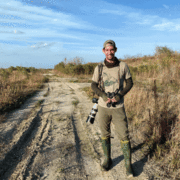
The “Zugun-crew”—a group of Georgia birders including Mac McCall, John Patten Moss, John Mark Simmons, and Eliot VanOtteren—participated in Georgia Big Day 2025. In 24 hours, they identified 188 bird species in areas between Athens and Brunswick! This event is also meant to showcase the bewildering variety of unique and precious ecosystems all present within the state of Georgia, many of which the every day passerby would not notice. They dedicated this year’s Big Day to One Hundred Miles. Learn more and support their efforts below.
Interested in hosting your own event to benefit One Hundred Miles? Please contact Virginia Zart!
Thank you for a great GA Big Day!
Thank you to the 30 supporters who together gave almost $3000 in support of GA Big Day. It’s not too late to join them! Use the form below to give today.
A Chat with Mac McCall
We had a chance to catch up with Mac McCall after the crew’s Big Day adventure. Read on to learn more about what it’s like to participate in a Big Day, why events like this are important (whether you love birding or not!), and an amusing story about a ghostly turkey. You can also find a chronicle of their day and all the species they identified here.
Remind us—what is a "Big Day"?
A “Big Day” is an attempt to see as many bird species as possible within some defined geographic area in a 24-hour calendar day. American Birding Association has rules that they put out for it. You can always play with the parameters a bit; you can take it as intensely or as leisurely as you want. You can do a Big Day in your county. You can do Big Day from your yard. The goal is to get out there and see or hear as many birds as you can.
What do you love about participating in Georgia Big Day?
I’m friends with a group of Georgia birders—we all grew up birding at the same time in the state. We got our start, gosh, like 15 years ago at this point. Pretty much all of us who do the Big Day team nowadays grew up doing the Georgia Youth Birding Competition, which is like a Big Day set up for kids, and we’ve stayed close since then. Since 2019, we’ve been putting together a team every spring to do a Georgia Big Day.
We set out hoping to break the Georgia record and hit 200 [species identified]. All of that is fun—it’s fun to hit the numbers and see how you can do from year to year—but I think the coolest thing about a Big Day is that it’s the ultimate test of birding skill. You’re testing how well you can identify birds by both sight and sound, but you’re also testing how well do you know your home state, how well can you predict where the birds are going to be, how well do you know your bird species, during the day when you miss a species can you figure out where to pick them up again… I think it really requires you to understand the ecosystems in your state and the birds there and their patterns, in addition to being able to identify them. That’s the thing that we love, all the strategy in the weeks and months leading up to it. We spend hours and hours poring over different routes, different ways to find different birds. That’s one of the big things that’s appealing about the Big Day to us.
This year, for the first time, there were two teams of young birders from University of Georgia and Georgia Tech competing against each other. They hit some of the same places that we did on their route, and they got some great birds. They also got a bunch of birds in places that we went that we missed, and we’re kicking ourselves for that. Like they ran some really interesting routes through Macon and got a lingering common loon. It’s really cool to see more people picking up on it, and we’re hoping to build on that and create something even bigger next year.
Why do you think Big Days are important, whether you’re a birder or not?
I think the number one hook that’s going to draw people to a Big Day is that it’s fun. It’s a great time. It is exhilarating. But it’s also that birding has greater societal value. It teaches you to understand what’s around you in the natural world. It teaches you to pay attention to what’s going on there and it allows you to keep tabs on that over time. The people that are keeping tabs on that and appreciating it are people that are going to be aware of what’s going on and want to protect what’s out there. I see birding as a fine hook into opening people’s minds to hopefully create a better world down the road. I have a lot of my friends who have gotten into birding and gained a greater appreciation of birds and our surrounding ecosystems that way.
What are some moments or revelations you’re taking away from GA Big Day 2025?
There are two favorite moments that come to mind right now. The first was when we hit our pinewoods route at dawn, near Fort Eisenhower in Augusta. It’s where we go to get all of our pineland species, like red-cockaded woodpecker, Bachman’s sparrow, turkey, bobwhite… and we were having a really hard time finding a turkey! We kept trying to call them in and weren’t having any luck and it was really misty. Then at one point, out of nowhere, a turkey flew out of the mist over the hood of our car. We didn’t see another turkey for the rest of the day. We called it our Ghost Turkey.
Later that morning or early afternoon, we were at Phinizy Swamp near Augusta, and we saw a dickcissel, which has only been recorded in Augusta a handful of times. That was exciting, in terms of it being a rare bird that we ran into.
I was thinking on the way back from our Big Day this year… We listened to the Whip-poor-will calls at night, to the birds migrating above us. We saw the masses of shorebirds moving along the coast at Andrews and in Goulds Inlet and Jekyll. We saw the neotropical migrants in Augusta. When I think about the things that actually make life worth living, that are unique on this planet, bird migration is one of the coolest phenomena out there. None of the BS that we expend our resources on in society can remotely stack up to what you can experience from seeing that kind of thing, so if we’re able to get more people to enjoy that and preserve that for future generations, then it’s all worth it.
Why did you choose to dedicate 2025’s Big Day to One Hundred Miles?
We see Big Days as an opportunity that shouldn’t go to waste. We’ve raised money for various organizations over the years; we did a scholarship for a young birder to one of the ABA birding camps one year, we’ve raised money for some habitat restoration initiatives in Augusta. This year, we chose One Hundred Miles because you are involved in several things that are fairly close to our hearts, like your work on Sapelo—we do the Sapelo Christmas Bird Count every year and it’s so upsetting to see what’s happening out there. We all love the Georgia coast and didn’t see a better way to spend the money than giving it to you all and the work you’re doing.

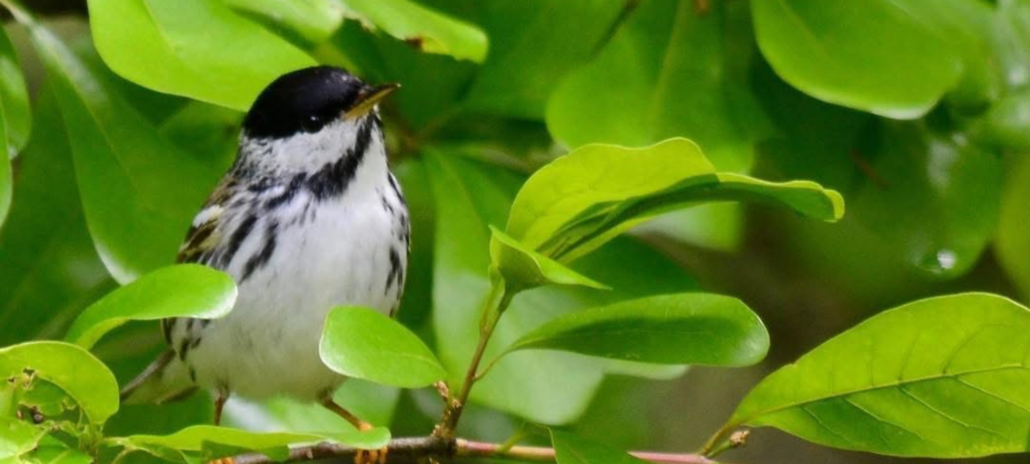
Meet the Blackpoll Warbler
From photographer John Mark Simmons: “This is a Blackpoll Warbler, a truly fascinating migrant that uses Georgia as a brief stopover site during Spring migration. In the fall on its’ way back south, it often makes a 3000 mile straight shot, missing GA just off its’ coast but sometimes stopping by again to feed.” The crew saw a Blackpoll Warbler this year at Phinizy Swamp Nature Park near Augusta!
“We’re so grateful for opportunities like this to celebrate our natural world and support the good work to protect it.”
Inspired to host your own event to benefit OHM? Contact Virginia!






Here you see