Mile Marker Party in Savannah
© Teake Zuidema
Thank you for a successful party in March!
Our Steering and Host Committees work alongside OHM staff to ensure that every Mile Marker Party is a fabulous success. We’re so grateful for their time, energy, and support!
Lucy Crosswell • Amanda Deitsch • Kim Iocovozzi • Carolyn Jenkins • Arlene Watson • Kate Grinalds • Virginia Zart
Cort and John Atkinson • Helen Ballard and Ric Felker • Meg and Dana Braun • Jordan and Danny Chase • Sylvia and Charles Coker • Ann and Scott Coleman • Ashley and Byron Colley • Lucy and Mark Crosswell • Connie and Glen Darbyshire • Amanda Deitsch and James Hochman • Liz Dunn • Mary Eckwall • Tish and Pablo Elizalde • Hannah Eyre • Royceann and Marc Friedman • Robert Glenn, Jr. • Elizabeth and Jamie Hamrick • Lorill and Patrick Haynes • Kim and Kevin Iocovozzi • Carolyn Jenkins • Terri and Al Kennickell • Hilary and Lowell Kronowitz • Liz and Simon Macfadyen • Martha and Dave Makel • Trish McLeod • Shani Mekler and Drew Gelfenbein • Diane and Henry Parkman • Audrey Platt • Eleanor Rhangos • Richard and Donna Schulze • Ann and Andy Sheils • Anne and Bill Shira • Katherine and Scott Warden • Arlene and Royden Watson

Contact Virginia to learn more about our Mile Marker Party series, as well as member events happening along our coast.



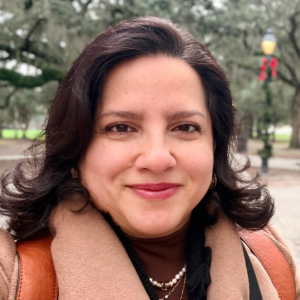
E. Gabriela Leva brings a global perspective to local conservation efforts along Georgia’s coast. Originally from Honduras, Gabriela’s 25+ years of leadership across 26 countries have centered on removing barriers for vulnerable communities and driving systemic change. Her experience managing $300M+ in humanitarian programming honed her ability to navigate complexity, build strategic alliances, and deliver measurable impact.
These skills are now applied to protecting coastal ecosystems and the communities that depend on them. As a recent U.S. immigrant, Gabriela’s lived experience navigating resettlement deepens her commitment to equity and inclusion in environmental advocacy. Known for forging partnerships across divides and leading high-performing teams grounded in feminist principles, she sees conservation as a human and ecological imperative. Gabriela’s mission is clear: to create pathways where people and nature thrive together.
As a recent transplant to Georgia, I am discovering every mile along its beautiful coast. It’s hard to choose a favorite spot when I have yet to see it all.
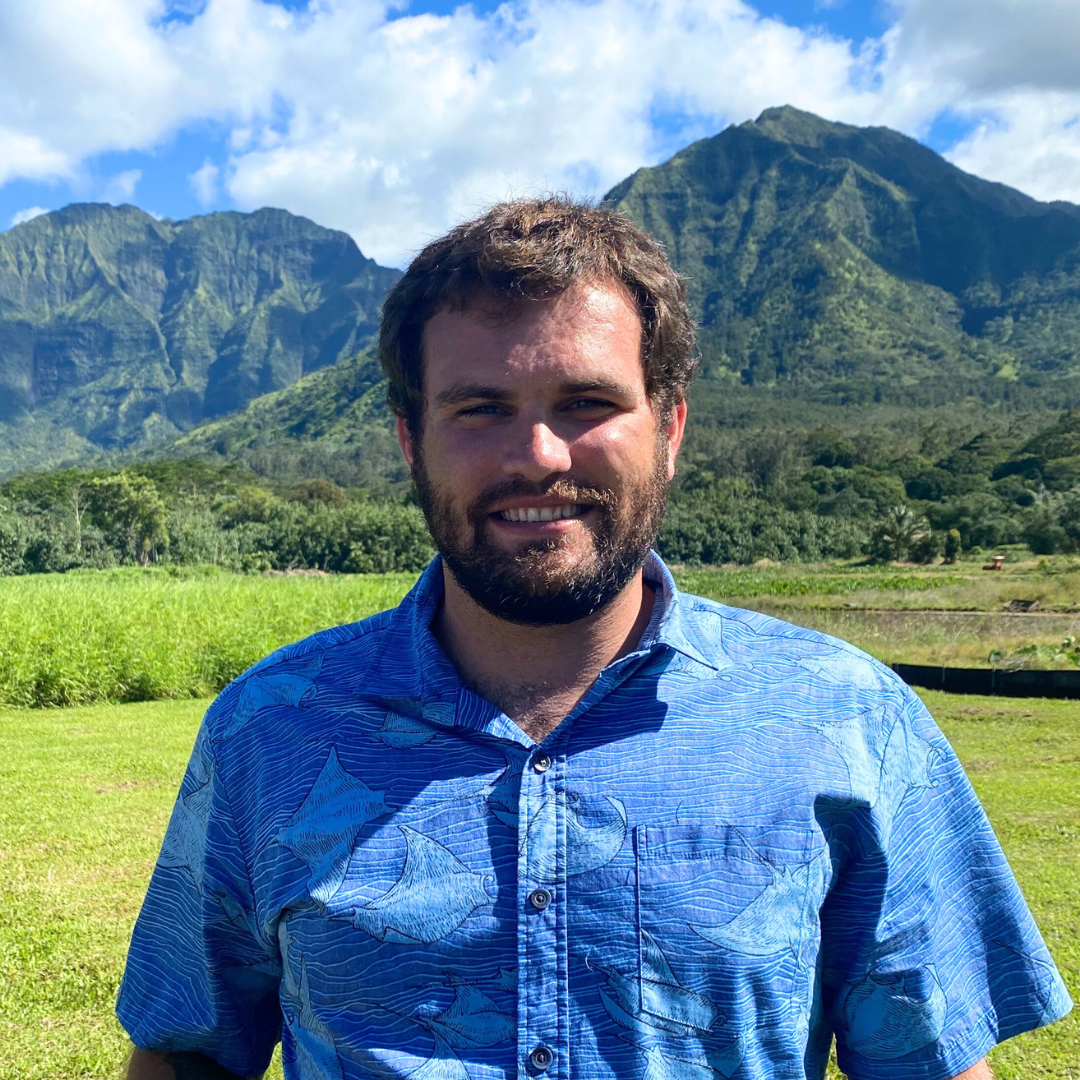
Jeff was born and raised in Savannah and came to love the coast through exploring the marsh behind his childhood home. He graduated from Georgia Tech with a B.S. in Biology and conducted three summers of undergraduate research at the Skidaway Institute of Oceanography. He then completed a PhD in Integrative Conservation and Ecology at the University of Georgia, focusing on environmental justice issues around coastal access, infrastructure, and tourism development in South Carolina. Afterwards, he was selected for NOAA’s Knauss Fellowship, where he worked as a Legislative Fellow in the office of Congressman John Garamendi. His last position prior to joining One Hundred Miles was as a contract employee at NOAA in the National Centers for Coastal Ocean Science.
Jeff is excited to be back home in Savannah and work on issues facing the communities and environments he loves throughout the Coastal Empire and Lowcountry.
The marsh behind my childhood home or anywhere that preserves and cherishes public access to our shared waterways.
Kat is a low-country local from Liberty County. She learned to appreciate the wild coastal landscape while spending her childhood summers on Jekyll Island.
Kat graduated from Mercer University with a B.A. in English and Anthropology. She received her M.F.A in Poetry from Bennington College. A lover of literature, she has spent her professional career shaping and sharing untold stories – from lifting past and present voices at the Ossabaw Island Foundation’s coastal symposium, to teaching after-school writing workshops with Savannah’s Deep Center, to advocating for low-income and senior Georgians at Georgia Legal Services Program. Now, she’s excited to amplify the voices of Golden Isle residents to preserve the unique culture of Georgia’s coast.
Flash a peace sign if you see Kat out kayaking or on a sunset beach walk. But beware: she will talk your ear off about manatees if provoked.
Every mile of undeveloped, natural beauty on Jekyll Island.
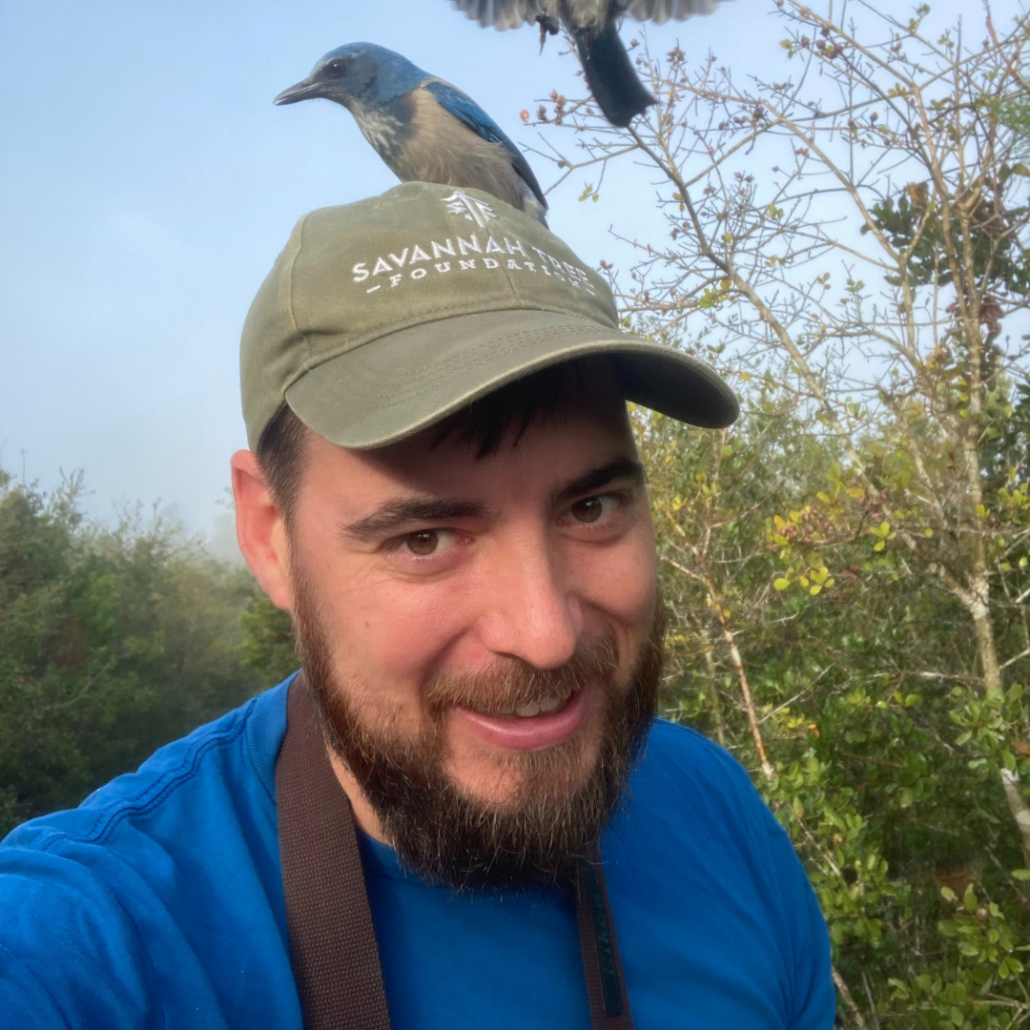
Eric is a science communicator and naturalist who has focused on teaching in the outdoors for more than 15 years across the coast, including at Oatland Island Wildlife Center in Savannah. He relishes opportunities to learn with people of all ages and backgrounds, with a primary goal of working to make our natural world more accessible so we can advocate for and protect it.
Eric enjoys birding, native plants, and finding out what’s under rocks and logs. He is a father to two young girls, a husband, and sometimes a falconer. If you see Eric out and about, share with him your latest moment of outdoor joy—he will definitely be excited with you.
North Beach of Tybee Island because the sand there ties you to the entire state from North to South. The weathered North Georgia mountains move through our state’s watersheds to end up at this most northernly point on the coast, and flows south from there as it has for thousands of years.
Virginia grew up in Savannah and spent her childhood in the water and mud. As she lived and traveled the world, whenever she came home, the smell of marsh let her know how deeply connected she is to the Georgia coast. Virginia appreciates living in this beautiful region again and loves being surrounded by its unique nature.
With a diverse background in business, government, and nonprofits, Virginia brings experience in events, project management, operations, collaboration, and community relations. She holds a BA in Political Science from Hollins University and an MBA in Finance from Fordham University. Virginia volunteers with the United Way, is a member of Seeds and Weeds Garden Club, and is a past president and sustainer of Junior League.
In her free time, you can find her out on a nature trail or the river with her husband and two chocolate labrador retrievers.
Tybee Island – so many memories swimming and playing along the beach and back river.
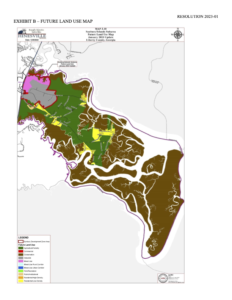 Here you see East Liberty County’s recently adopted land use map. The gray area is Sunbury/Islands Subarea—where most of the industrial rezoning has taken place. Over the last several months, in accordance with this map, many agricultural zones (demarcated in green) have been rezoned into industrial (gray), which immediately abut the residential zones (yellow and orange). The proposed commercial zones (red) are insufficient to provide any sort of adequate buffer for the existing communities, not to mention any that will be built to house the workforce drawn to Liberty as industry grows.
Transition zones are a way to taper land use from “heavy” (think industrial: 24-hour lights, traffic from trucks, noise from machinery and operations) to “medium” before hitting the “light” use (think residential: commuter car traffic, schools, playgrounds). These transition zones can be commercial, containing local businesses and public spaces; character areas, combining the more condensed development of town homes with green spaces; or even conservation areas. They are vital for maintaining community health, safety, and personality, as well as conserving land for native and migratory species.
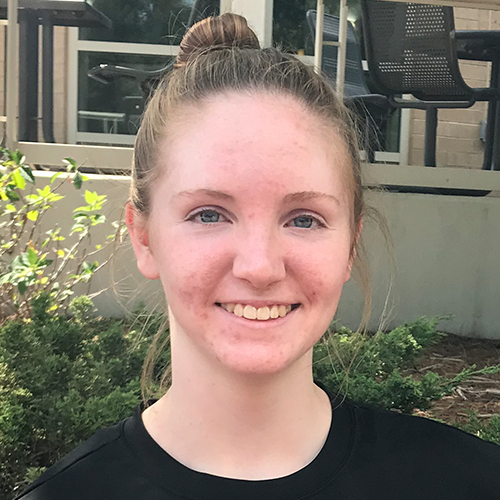
Adventurous, Creative, Assiduous
I don’t know exactly what it is I want to pursue later in life, but I know I want it to be something that gives me the freedom to travel and explore the world while still making a difference. I want to do something that allows me to be creative and pursue my passions, something more than just a standard desk job.
I’ve participated in South Carolina’s Olympic Development Program for soccer for the past two years.
My favorite place probably has to be Saint Simon’s Island. It’s not just about how beautiful and serene it is, though. I like how being there makes me feel. I like that it makes me feel at peace with myself and lets me escape from the world around me.
I think that major coastal issues to be concerned about primarily surround plastic pollution and the degradation of beaches and coastal lands. There are so many issues that are important and worthwhile, but I feel that plastic pollution is especially important. It threatens wildlife and chemicals leeched can harmfully impact human health, as well.
You are never too small to make a difference. Every movement and every change in history has started with one action, one idea, that was built upon to create change. All contributions, big or small, have the power to make a difference.
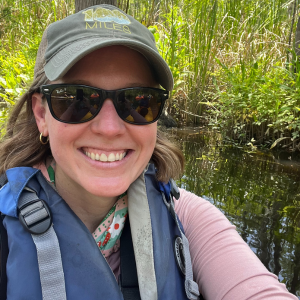
Stephanie’s love for the ocean started at a very young age on the beaches of Stone Harbor, New Jersey, searching for and collecting shells with her Nana. This childhood passion never stopped, and she followed her interest in the outdoors by pursuing a degree in Marine Science from American University in Washington, D.C.
After college, Stephanie spent time teaching environmental science in Florida, California, and Georgia. Ultimately settling on the Georgia coast, she worked at Driftwood Education Center on St. Simons Island as the Program Director and later with the Georgia Department of Natural Resources as a Naturalist on Sapelo Island. Stephanie continues to share her love of our coast as a part of the One Hundred Miles education team.
Cumberland Island, where my love for the coast began
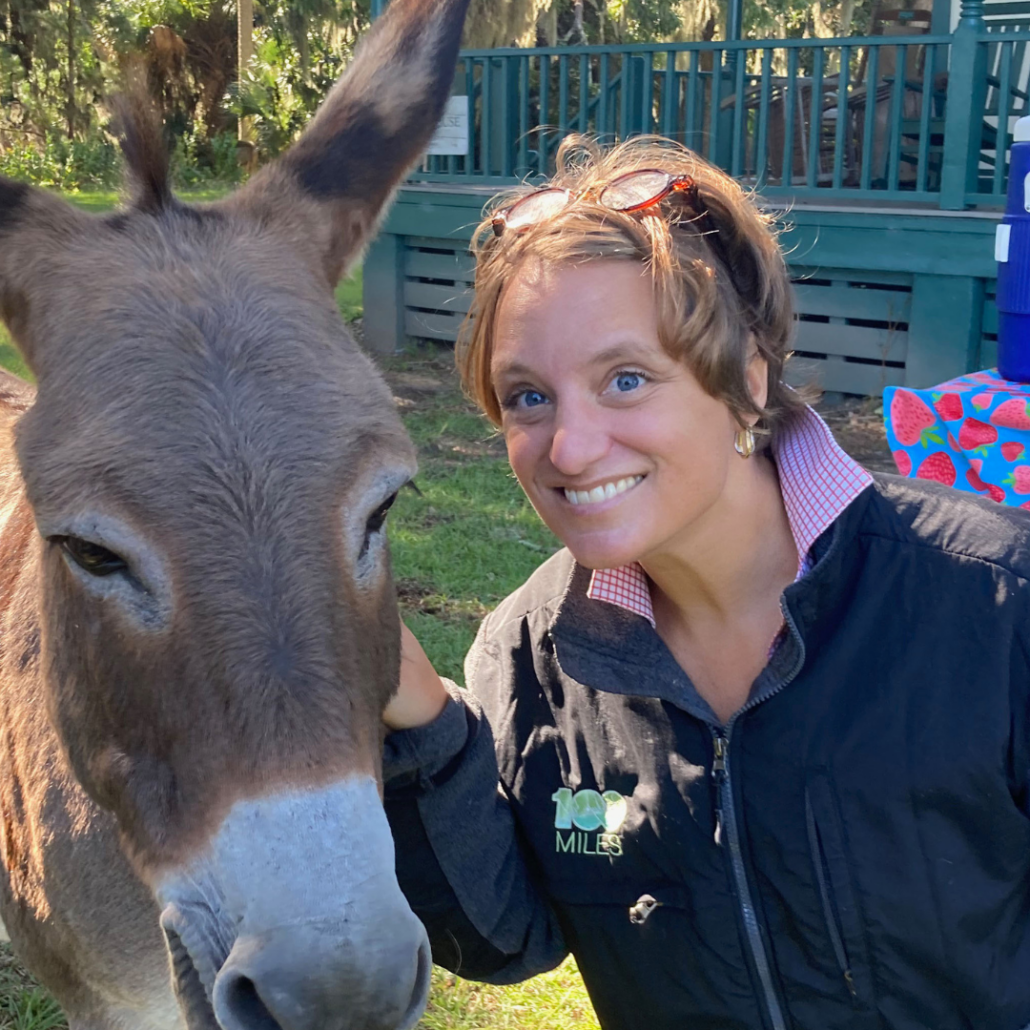
Megan Desrosiers is the founding President/CEO of One Hundred Miles, Georgia’s coastal advocacy organization. In an effort to elevate the Georgia coast as a recognized place of historical, cultural, and biological significance, Megan spends her time working in local communities, on regional collaboration projects, and lobbying in Atlanta.
Megan and her team have accomplished a remarkable amount since the organization’s inception ten years ago. One Hundred Miles is responsible for improvements to the Erosion and Sedimentation Act which now requires a 25-foot buffer for all salt marsh, galvanizing statewide opposition to offshore drilling, preventing the US Army Corps of Engineers from dredging during the summer when Georgia’s sea turtles come home to nest, and leading citizens’ efforts to stop Spaceport Camden and repeal harmful zoning on Sapelo Island. Under her leadership, One Hundred Miles has built a network of more than 35,000 advocates who stand ready to respond to bad and promote good ideas that will affect our coast. In six short years, the organization has grown from two employees to 14, an annual budget of $250,000 to more than $1.5 million, and a donor base of six to one of more than 1,200 today.
Before coming to Georgia’s coast, Megan spent ten years at the Coastal Conservation League (CCL) in South Carolina. She was instrumental in efforts to conserve land in the Ashley River Historic Corridor and on Johns Island. She also worked to establish the organization’s first climate and energy and agriculture program agendas.
Megan has worked through the years to help start up organizations form and become sustainable coastal advocacy partners in Georgia and South Carolina. In addition to forming One Hundred Miles, she worked with a team to start GrowFood Carolina, South Carolina’s first local food hub, and collaborated with a group of diverse leaders to initiate Charleston County’s Greenbelt Program. Megan has also served on the founding boards of the South Carolina Outdoor Education Program (SCOEP) and Charleston Moves, a bicycle/pedestrian advocacy organization.
In 2024, Megan was honored with the James S. Dockery, Jr. Southern Environmental Leadership Award from the Southern Environmental Law Center for her excellent and longstanding environmental leadership in the Southeast.
Forsyth Park in downtown Savannah