Dig Deeper
Check out these videos, pages, and articles to learn more about Georgia’s sea turtles, the threats facing them, and how you can help.
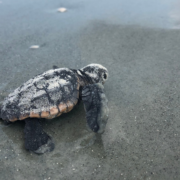
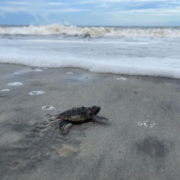
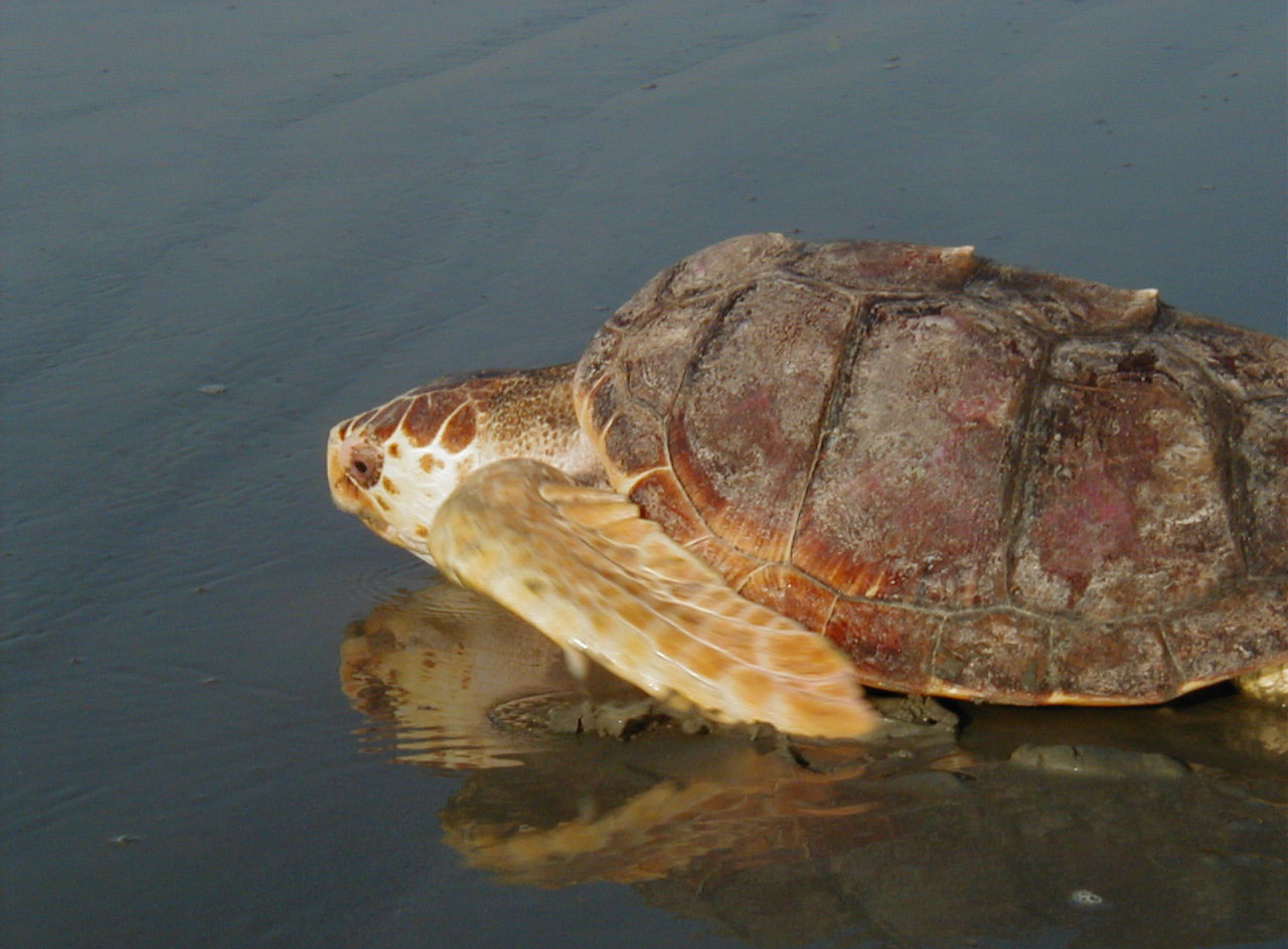
Spot it: Loggerheads are named for their large, blocky heads, which support powerful jaw muscles—needed to crush hard-shelled prey like whelks and crabs. They are a distinctive reddish-brown color.
Fun Fact: Did you know that the oldest loggerhead nesting project in the world began right here on Georgia’s coast? In 1964, Dr. Jim Richardson, then a graduate student with the University of Georgia, and other researchers, began studying loggerhead sea turtles on Little Cumberland Island! Dr. Richardson’s legacy continues on through the Georgia Sea Turtle Cooperative.
Species Spotlight: Loggerhead Sea Turtle
Caretta caretta (Status: threatened)
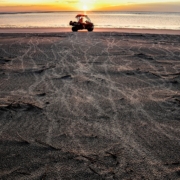
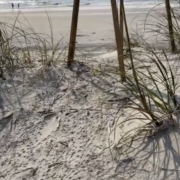
As our state’s most common nesting sea turtle species, loggerheads primarily visit Georgia’s beaches at night, leaving behind their signature tractor trailer-like tracks in the sand. Loggerheads don’t reach reproductive maturity until their mid-thirties! Females lay an average of 4-6 clutches every 2-3 years and will continue to nest throughout their lifetimes. Each nest contains around 115 soft and leathery ping-pong ball-like eggs. In Georgia, nesting typically starts in May (like clockwork, this season’s first nest was laid on May 1!), with hatching beginning in July.
After an incubation period of around 60 days, baby loggerheads will emerge from the nest, also usually at night. Hatchlings use each other to crawl out from the egg chamber, spilling out onto the sand together like a pot of overflowing water (commonly referred to as a “boil”). While loggerheads face threats from natural predators throughout their lifetimes, habitat loss, artificial lighting, commercial fisheries, and other human-caused threats pose the most serious conservation threats.
Though Georgia has marked a string of record nesting years over the past decade, models show that the Northern Recovery Unit population (loggerheads born on nesting beaches from the Florida/Georgia border through southern Virginia) is still only a third to half of its size from the 1960s. And despite these recent highs, it wasn’t long ago when we experienced record low nesting seasons—setting up a period of plateau or decline until 2040.
How to visit & recreate responsibly
The GSTC is open from 9 am – 5 pm daily, with additional experiences, like evening turtle walks and ride-alongs available by reservation only. While on Jekyll Island, you can also check out nearby Tidelands Nature Center or walk the beach in search of a turtle crawl.
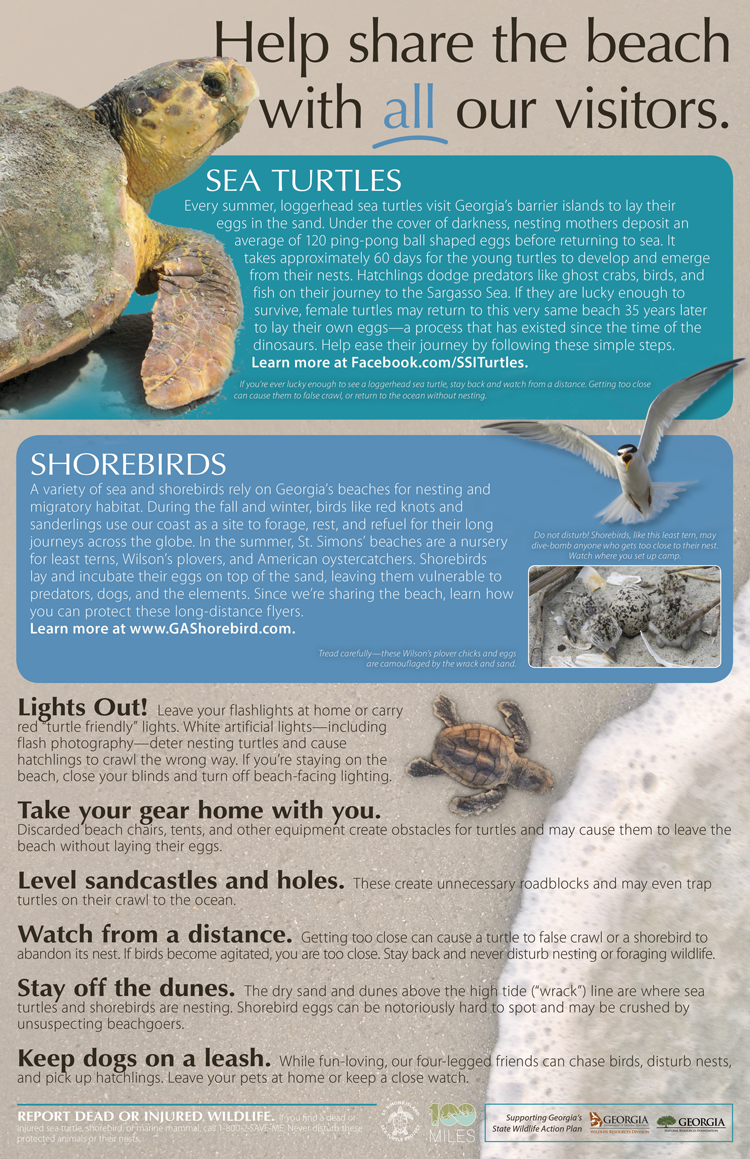
On every Georgia island from May-October, it’s critical that we all do our part to keep our beaches clean, dark, and flat. Follow these simple tips to ensure you’re sharing the beach responsibly:
 LIGHTS OUT! Nesting sea turtles avoid nesting in brightly lit areas and bright lights may cause them to false crawl. Hatchlings can become misoriented by artificial lighting and crawl towards the lights instead of the oceans. Turn off or shield any beach-facing lights on your property.
 Walking the beach at night? Turn off white flashlights and choose a turtle-safe red LED light instead. Better yet, walk by the light of the moon or your own natural night vision (you’ll see more stars and maybe even some bioluminescence that way!)
 Take chairs, tents, and gear home with you at night. Knock down any sandcastles and fill in holes so as not to add any obstacles.
 Keep dogs on a leash. Even the most fun-loving pup can hurt our nesting shorebirds and sea turtles.
 Leave no trace! If you see a turtle or nest, avoid walking on the tracks or near the nest. The nesting projects use these natural cues to locate and protect the eggs. Be sure to properly discard your trash, plastics, and fishing line.
🛥️ Go slow when boating, and keep a close eye for turtles and marine mammals.
 If you are ever lucky enough to encounter a nesting turtle or hatchling on the beach, please stay back and watch from a safe and quiet distance. Getting too close can cause her to abandon her nesting attempt and return to the ocean without laying her eggs or a hatchling to go the wrong way.
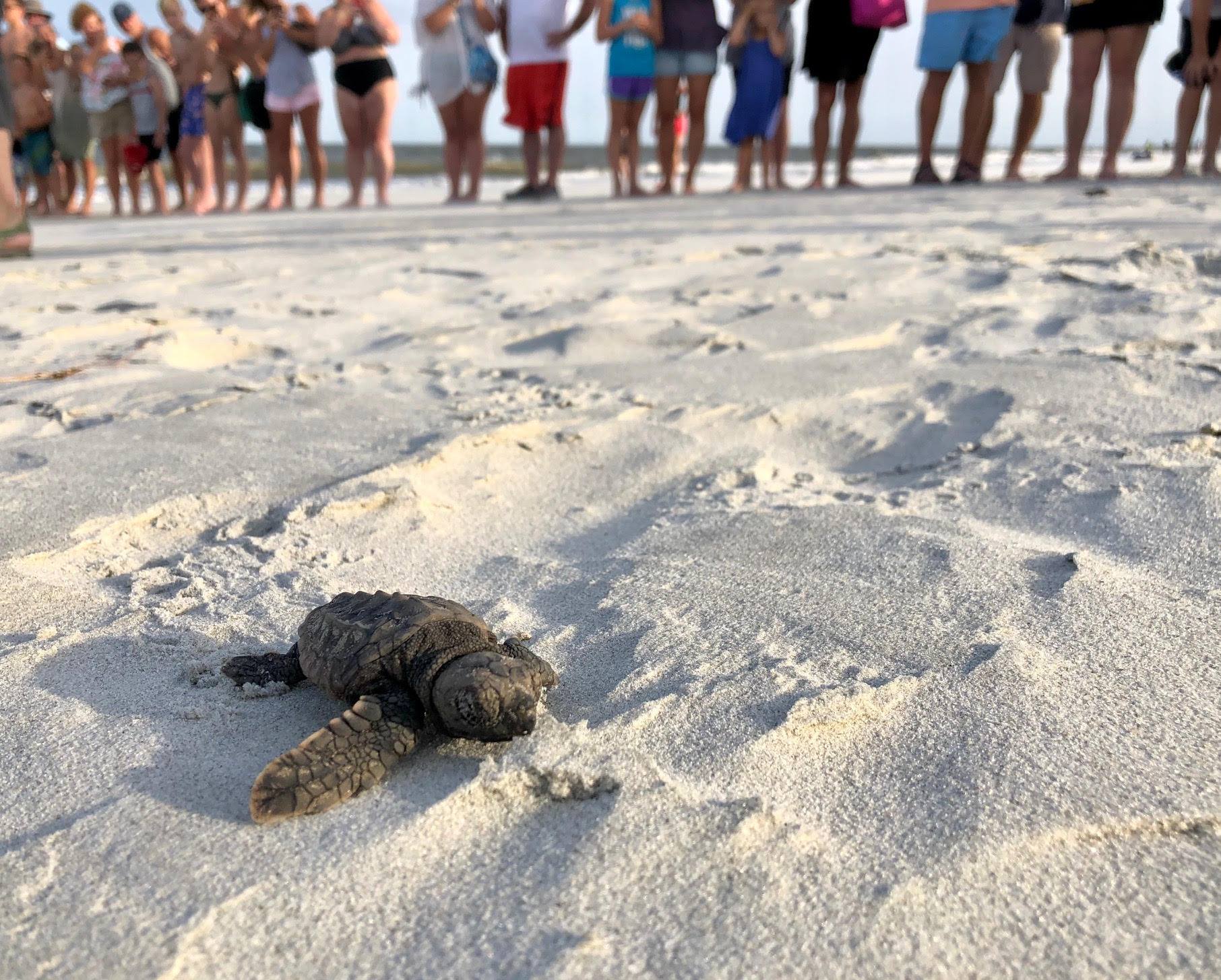
Lights out!
One Hundred Miles works year-round to protect sea turtles from harmful proposals like spring and summer dredging and the negative impacts of artificial lighting. We’re currently advocating for a long-overdue update to Glynn County’s beachfront lighting ordinance. You can help!
Take Action
Send an e-card to your friends with turtle-friendly beachgoing tips. Or send a Lights Out card to Glynn County Commissioners, urging them to take action for our turtles. Email Katie for your own image that you can email or text out!


Beach Reads Booklist
Sea Turtles of the Atlantic and Gulf Coasts of the United States by C. Robert Scoop and Carol Ruckdeschel
Our Sea Turtles: A Practical Guide by Blair and Dawn Witherington
10 Reasons to Love a Turtle by Catherine Barr (for kids)







 Here you see