Threats to Georgia’s salt marsh
Threat: Fragmentation and Private Docks
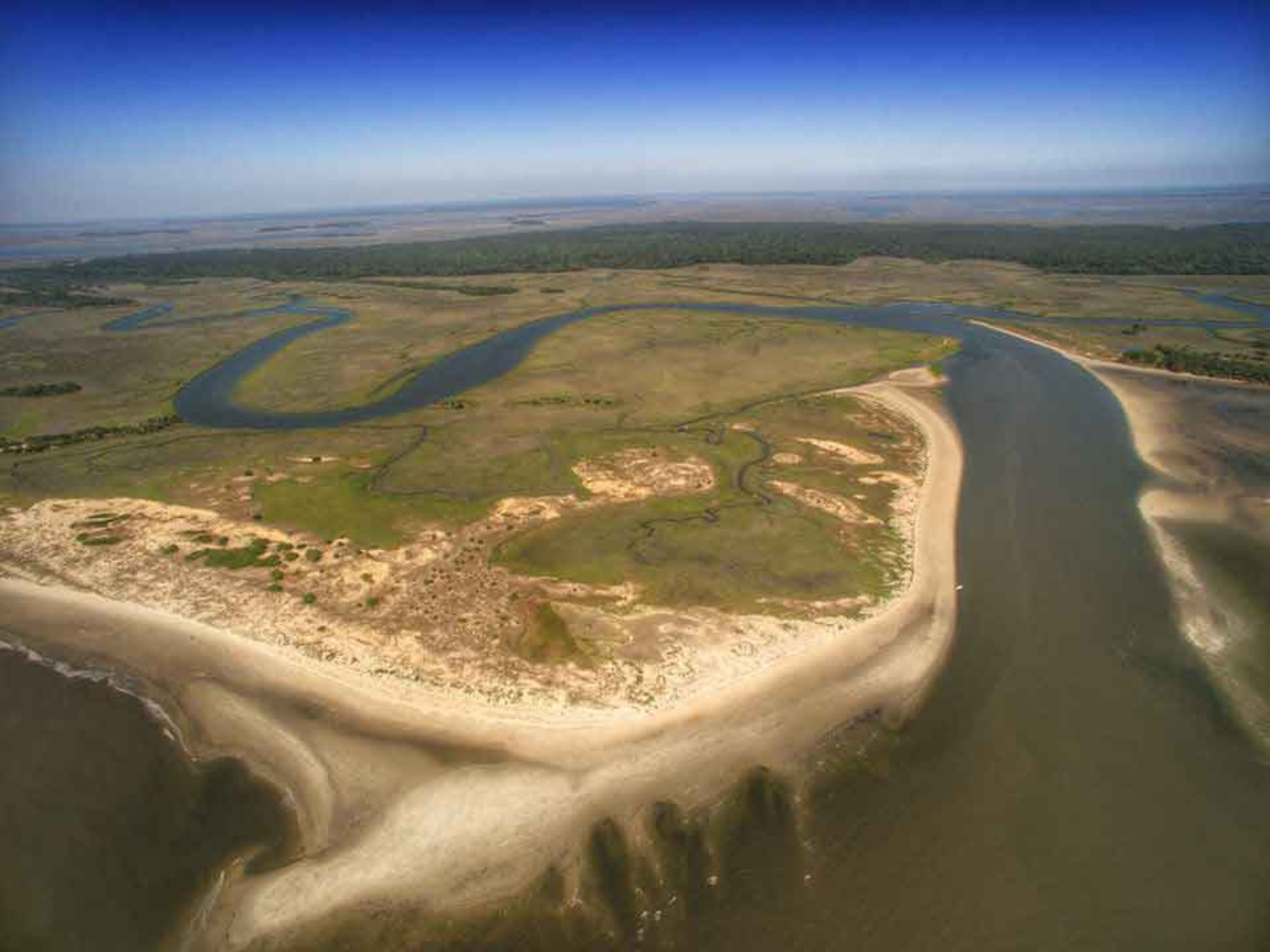
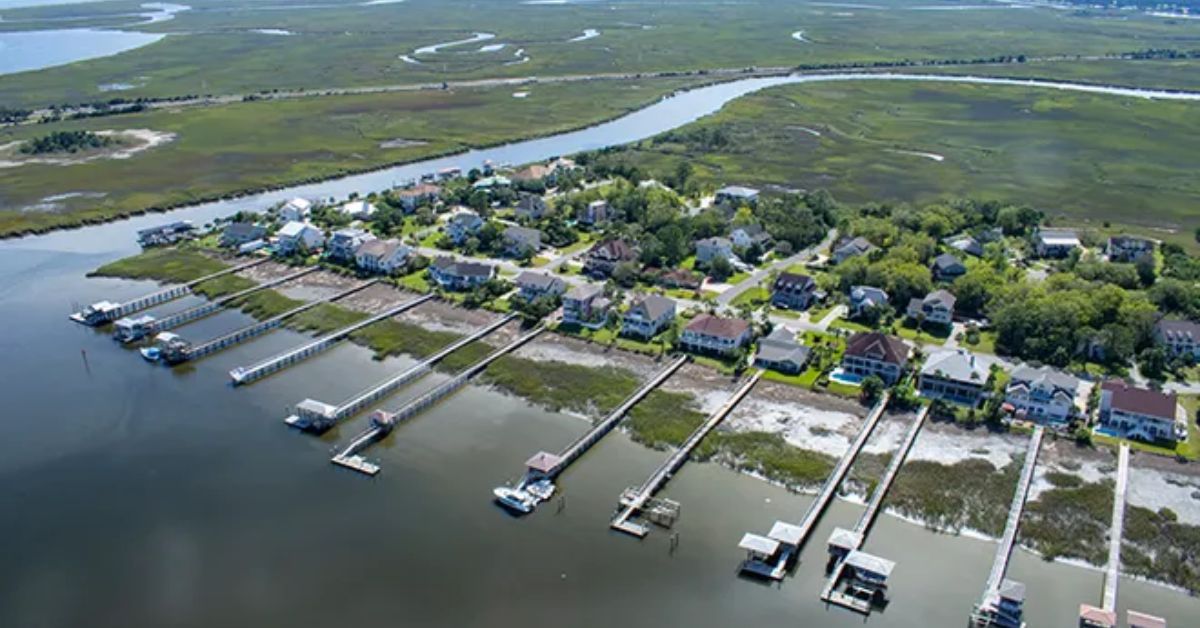
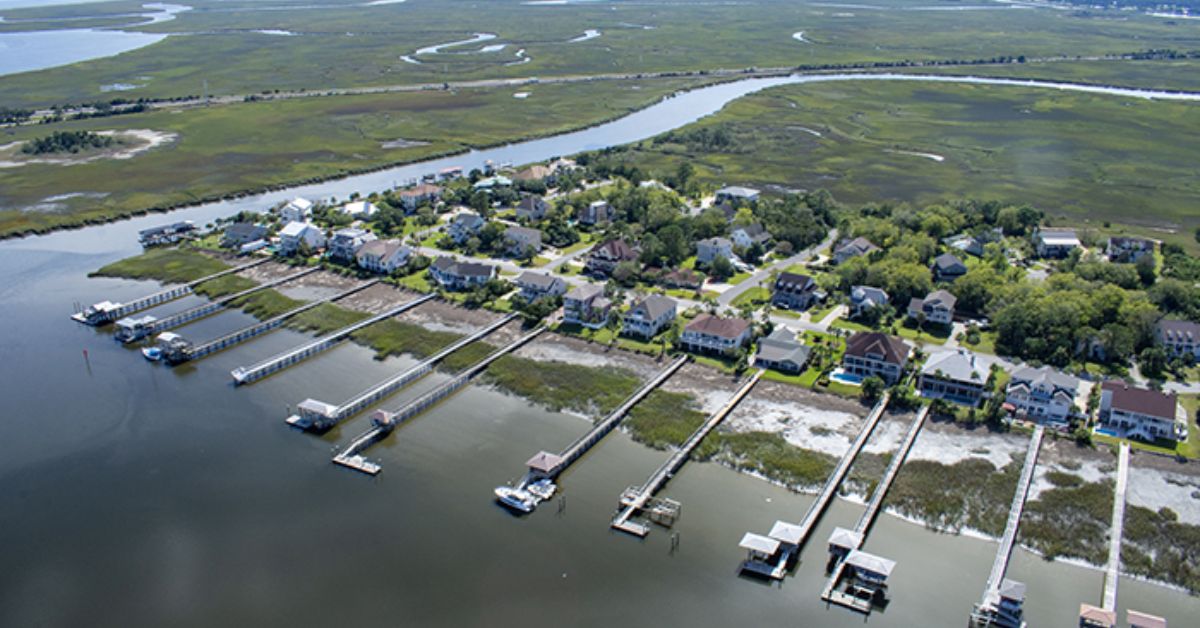
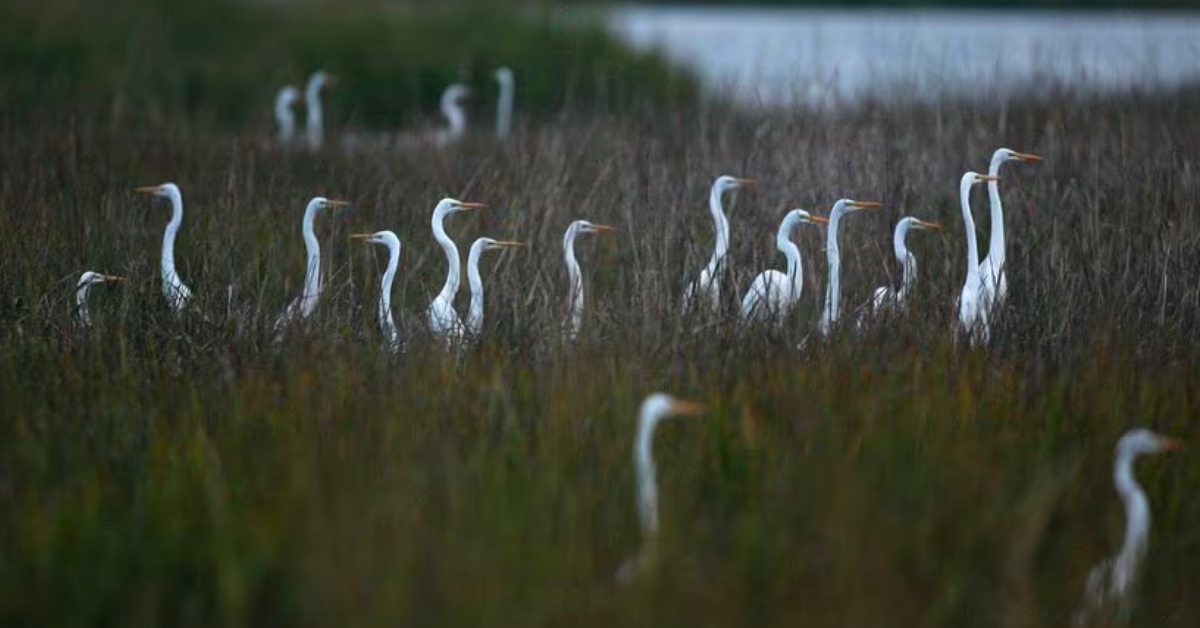
Among other things, DNR’s Coastal Resources Division (CRD) regulates the construction of private docks over publicly owned marshlands. Weakened regulations (allowing more, longer, and larger docks) lead to a fragmented marsh ecosystem—disturbing valuable habitat for High Priority marshland bird species, limiting general public access to marshlands and waterways in favor of the wealthy select, increasing likelihood of damage from storms, and diminishing marshland views for upland neighbors and boaters.
In July 2024, CRD invited OHM to join a stakeholder committee to evaluate the private dock standards and provide recommendations for new rules proposed in January 2024. On September 4, 2025, CRD hosted a Town Hall where the public learned more about proposed changes to private recreational dock construction standards, as well as give public comment. More public comment opportunities have been promised. (More below)
CRD Proposed Dock Regulations
DNR’s Coastal Resources Division is considering new rules for private recreational dock construction across Georgia’s coast and is looking for public input. This is a great opportunity for the public to help craft regulations that both protect our salt marshes and provide safe access to these iconic natural spaces.
You can learn more about the threat that private recreational docks can pose to our salt marsh in our Issue Investigation webinar, “Protecting our Marshes from Fragmentation.”
CRD held a Town Hall in early September 2025, where they shared more about their proposed changes and gathered input from some of the more than 60 attendees. Recommendations, comments, and concerns can be emailed to Jill Andrews ([email protected]) at any time throughout this process. We anticipate a public comment period coming soon after the May DNR Board Meeting. Stay tuned for more details!
Key Takeaways from the Town Hall
Attendees at the Town Hall emphasized that the proposed dock regulations must prioritize clarity and safety. Regulations need to include clear standards and expectations for both homeowners and dock builders. Residents asked for stricter safety requirements and that CRD work with the appropriate agencies and city/county departments to ensure docks are built to proper codes.
CRD indicated that they are planning to move forward with “select interim variances to size standards.” Only one attendee at the meeting spoke in favor of docks longer than 1000 ft. Another criticized the implementation of variances, saying they could render regulations moot if all variances are approved.
The proposed dock regulation changes reportedly prioritized 3 comment letters received in spring 2024 and the stakeholder minority report over the near-unanimous stakeholder committee recommendations. CRD has said they will provide more opportunities for public engagement and comment. They will go to the DNR board for a re-briefing in Spring 2026.
Our recommendations
As part of their revision process, we are asking CRD to:
- Prioritize an update of the Georgia dock database to provide a comprehensive picture of docks across the coast.
- Uphold current standards:
- Limit single family dock walkway length to 1,000 linear feet or 3,000 square feet.
- No docks to creeks less than 20 feet wide.
- No bridging over creeks greater than 20 feet wide.
- Limit fixed deck size and overall footprint.
- Align rules with surrounding states.
- Create a Georgia dock builders certification program to ensure safety standards are upheld.
- Develop an education program with the real estate community to support proper advertising of waterfront, marshfront, and deep water properties.
Threat: Hardening the coastline
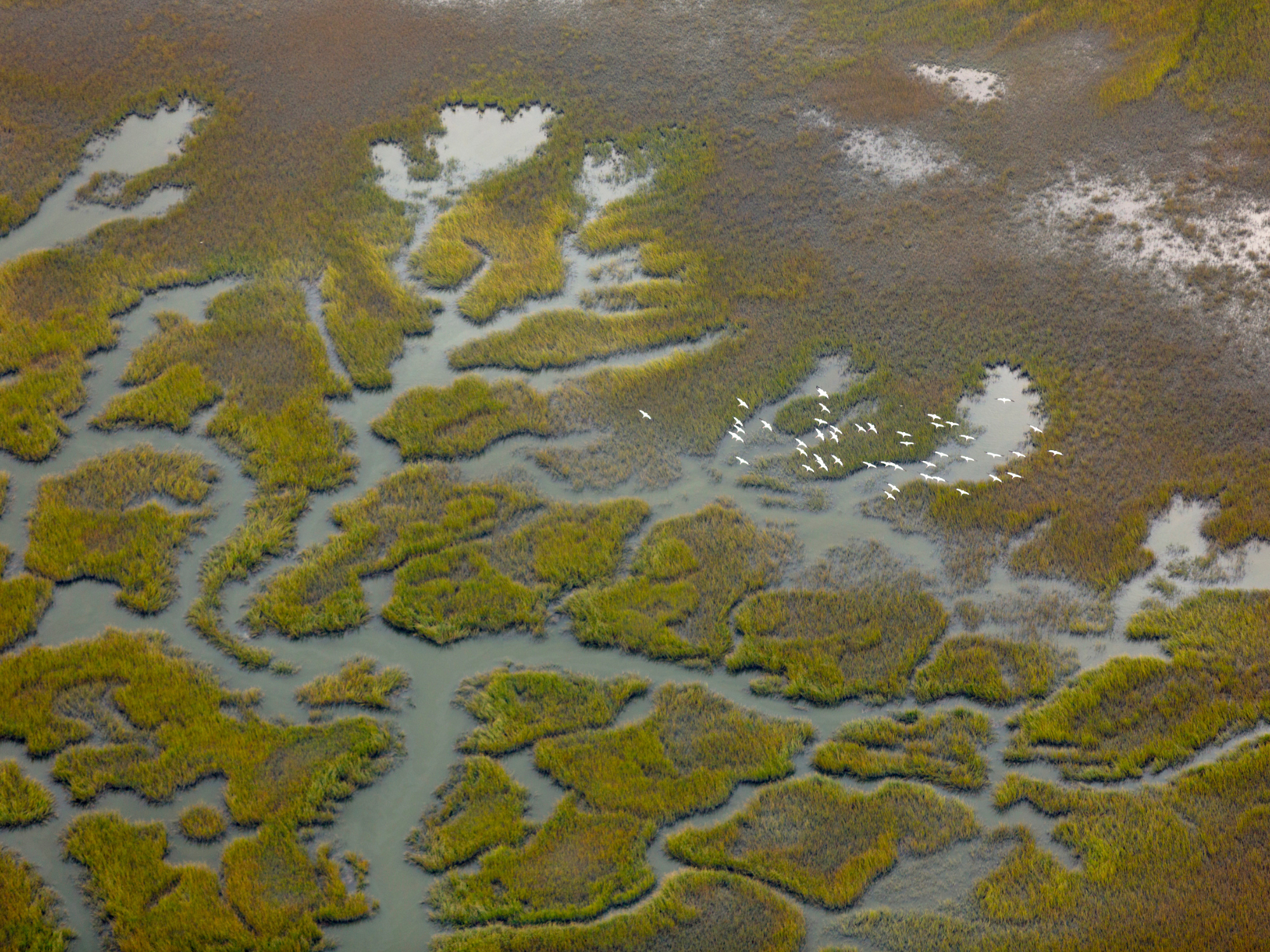
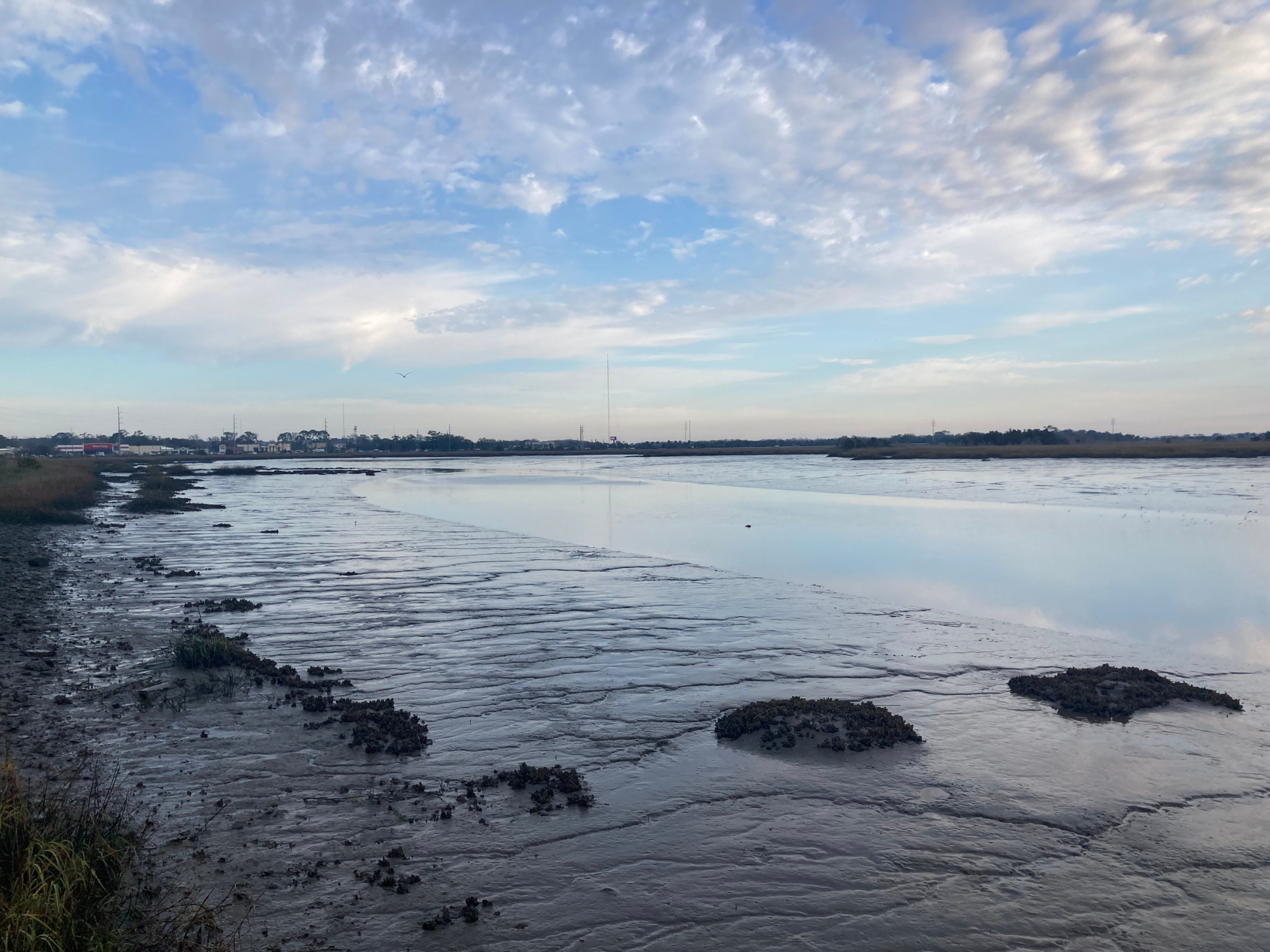
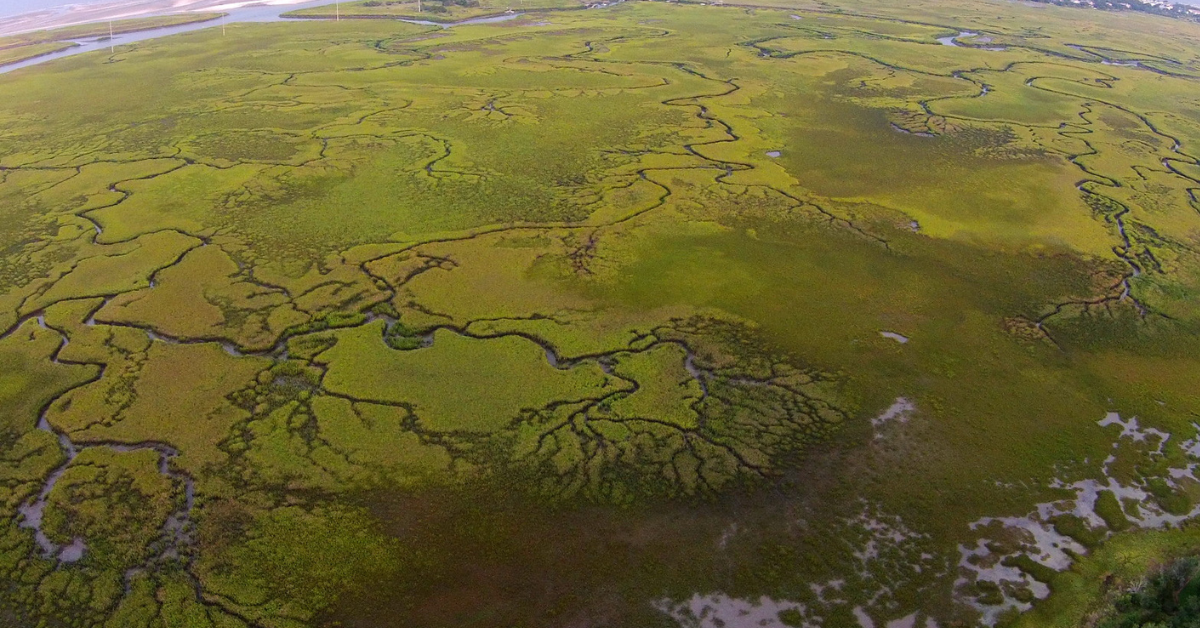
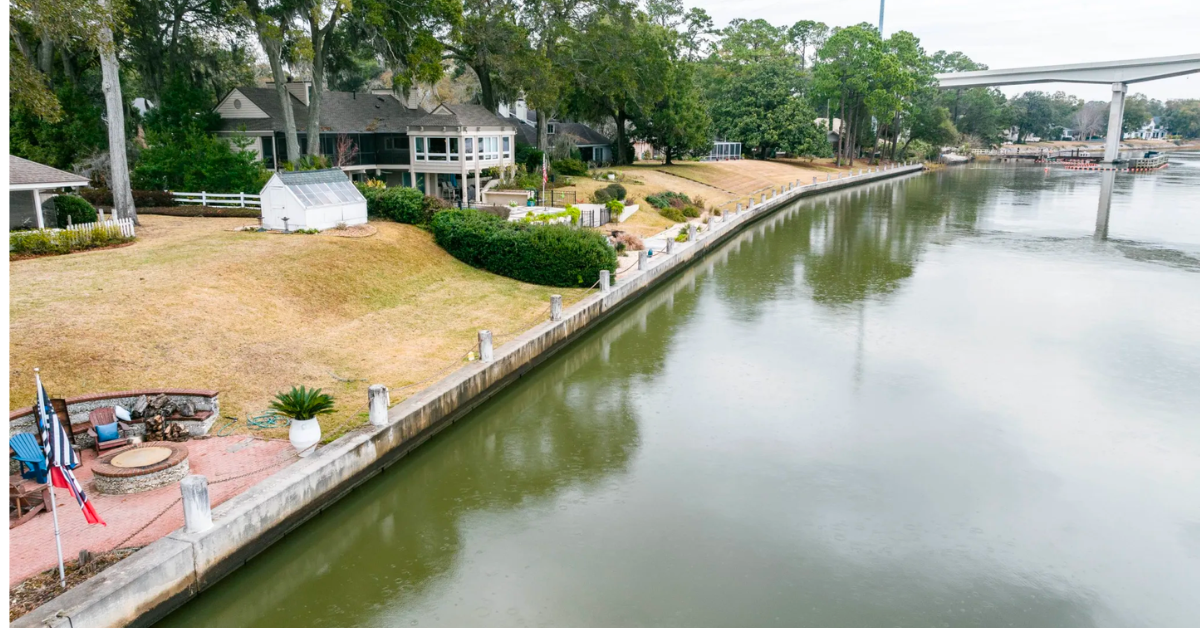
Our marshlands are nature’s sponges, absorbing floodwater, dampening storm surge, and filtering pollutants. In Georgia’s dynamic coastal environment, the more natural the shoreline, the better. Living shorelines, for example, are a great method of stabilizing property and enhancing the functionality of the marsh. Bulkheads, on the other hand, function very differently. They are a stabilization method to harden or armor natural transition areas and, by definition, are designed to separate land and sea, eliminating the function of that natural area. CRD’s own guidance document states, “There is a broad scientific consensus that armoring generally degrades the integrity of the marine environment.” We are continuing to advocate that CRD maintain oversight of projects that impact our marshes and marshland buffer areas, in line with guidelines laid out in the CMPA.
Threat: Privatization via Legislation
For the last several years, developers have pressured decision-makers to make it easier to build on the marsh. Most recently, House Bill 370 proposed changes to the process by which the State of Georgia verifies Crown (or King’s) Grants, historical documents granting private individuals ownership of the marsh. The changes would have drastically shortened necessarily lengthy processing times, shifting the burden of proof onto the State and making it far easier for private individuals to lay claim to this vital public resource. Over the years, thousands of Georgians have spoken against bills like HB 370, blocking them in the State legislature.
Read more about the fight against HB 370
A bill originally introduced into the Georgia House in 2023 was resurrected in the 2024 legislative session. Because of the hard work of our partners at the Capitol and hundreds of advocates like you, HB 370 did not make it to the House floor for a vote and is dead!
If passed, HB 370 would have made it easier to privatize Georgia’s salt marsh. Currently, the State of Georgia owns all of the salt marsh on our coast unless a landowner can prove that he or she holds an in tact Crown Grant from the King of England.
While a few crown grants still exist, any new claims to having a grant to our salt marsh must be verified by the Georgia Attorney General. Crown grant certification by the AG can take 3-5 years. This is because 250 years of documentation is understandably difficult to decipher, comprehend, and verify.
Further compounding the issue, nearly all crown grants contain unique stipulations which, if violated, nullify the grant. Examples of the stipulations include sustained rice cultivation, livestock grazing, and a commitment that all generations of male family members serve in the military. Hence, today private ownership of marshland is rare.
While we are all for private property rights, it is in the best interest of all Georgians to only give our ownership of salt marsh away when there is absolute certainty that the private rights exist. This bill shifted the burden of proof away from the petitioner and onto the state, forcing them to make irreversible decisions in an unreasonably short period of time (180 days). If the state failed to meet these shortened deadlines, the Kings Grant would have been certified by default.
Salt Marshes in the News
UGA Today | 11/14/25
Savannah Morning News | 9/9/25
E&E News | 8/28/25
GA DNR CRD | 8/8/25
The Post and Courier | 3/27/25
WABE Grist via The Current | 11/26/24

The Daily Report (Law.com)| 5/13/24
Atlanta Journal Constitution | 3/8/24
Georgia Recorder | 2/26/24
The Current | 1/23/24
Capitol Beat | 1/19/24
The Current | 1/16/24
WABE | 1/8/24
The Brunswick News | 1/6/24
The Current | 12/30/23

“Our salt marshes have been protecting us for years. It would be foolish for us to ignore and destroy these iconic landscapes.”
Contact Alice for more information about our work in salt marsh conservation.






 Here you see